Easter 5 (B) – 1 John 4:7-21 – John 15:1-8

You certainly know the saying: “Jesus is coming…Look busy!”. Well, I guess it could come as a surprise for many to realize that the Gospel says quite the opposite.

We are in this portion of John’s Gospel known as the “Farewell Discourse” – the last instructions Jesus gave to his disciples before his death and Resurrection – and although very different in form, these instructions are basically the same than they are in other parts of the Gospel, especially in Luke-Acts, where Jesus asks his disciples to remain in Jerusalem (until they have received the Holy Spirit). In John’s, as we have read today, Jesus commands his disciples to “abide” in him – it is a more spiritual way of putting it (when Luke insists on a geographical location), but the idea is the same.

As Jesus departs the disciples and they wonder what they are called to do to continue his legacy, Jesus, basically, urges them to do nothing. Or at least, to start by doing nothing.

And of course – this is where it gets very counter cultural. In our saying “Jesus is coming, look busy”, we’re maybe making a joke, but it says a lot about the way we think about things. We need to get stuff done. A few centuries ago, doing nothing (at least in Europe) was considered the privilege of the rich and actually not being busy was a sign of an elevated social status but it’s probably the opposite today in our culture: if you want people to think well of you, you’d better be busy and “accomplish”. And so if you want Jesus to think well of you, well, get busy.

And of course, there is a little truth to that – that’s the way we tend to run our churches, with programs, classes, outreach ministries and all sorts of activities…. Not necessarily because we want Jesus to think well of us, we do it from the heart, but we also think that’s really what we are supposed to do, what is expected. But today we are invited to back to the Scriptures to really hear those words:

Jesus asks his disciples, first, to stay put.

Which may – or may not – be doing nothing. Actually, it seems that for Jesus, this is the first thing we need to do if we want to be productive, if we want to bear fruit. We need to root ourselves in Him – not in order to flee from the world or to be shield from it – but to experience God’s love, because the only fruit worth bearing is to share of the love, and how could we share what we haven’t received?

Last week, I had a very interesting conversation with my young cousin. She is going to get married this summer and has been doing marriage counseling with her fiancé at his church. He is a staunch catholic and she has no religion whatsoever– she has been raised by parents who are atheists and haven’t given her any kind of religious education. And so, as you can imagine, going through the motions of marriage preparation with a lot of other couples who have been born and raised in the church isn’t easy for her. She has a lot of questions, and not many answers. But one of the things she told me last week really stuck with me. She said that she felt sad that during the whole training, she heard so many times that “marriage was hard” and that basically, it was bound to fail if it wasn’t for God, and she did not know this God!

So she asked me if I believed that her marriage was bound to fail since she didn’t know God. So I thought about it for a few minutes and I told her: Well, it’s like you were asking me if your marriage was bound to fail without love. I would probably say yes. Because God is love, so yes, probably your marriage won’t work without God. But if we really believe that God is the creator and at the root of our being, well basically nothing can work and nothing should be working in this world without God.

(Which is basically what Jesus tells his disciples today: Without me, you can do nothing.)

And so, you see, as we were having this conversation I realized something quite distressing about the church. My cousin who has no religious education at all, and who is yet of very good will going through this program with (and mainly for) her fiancé is missing the whole point about what our faith is about – because there is no Christian around to tell her – at least not in a way she could experience it – that God is love, that God is already present in this love she shares with her fiancé.

How sad, indeed.

In the Letter we have just read, John reminds his community 30 times that God is love and that our job – our first job and the job Jesus asks his disciples to do today – is to experience that God is love and experience the love of God.

We want to do good. We mean well. We try to attract young people, to make Church fun or relevant or even to offer some solid education – some churches even manage to do all of that in the same time and that’s awesome – but we forget to share our experience of love, to enable the experience of God in our churches. And I think it happens, no so much because we are unwilling – but maybe just because we haven’t done this experience – we haven’t allowed ourselves – to do this experience for ourselves. And to me, this is the question Jesus is asking his disciples (and is asking us) today: How are you going to share the good news, if it isn’t good news for you, how are you going to share the love, if you haven’t felt loved, allowed yourself to be loved and allow God to love you? As much as you mean well, as much as you will get busy, even for the sake of the Kingdom, you won’t get anything done – at least you won’t grow any fruit worthy of the kingdom.

The first thing and the most important thing we have to do as Christians is to open ourselves to experience God’s love as it was revealed in the life, death and Resurrection of Jesus Christ. It’s the only way we can show love and become the witnesses we are meant to be.

So how do we do that? Well, as I’ve said earlier it looks like the Gospel points us in the direction of not doing anything – but it’s not exactly true. Jesus commands us to abide in him, to abide in his love and it require from us a lot of intentionality. If I were to translate this passage, I would probably use the verb “soak” – because this is what I hear Jesus say: “soak yourself in my love”, “”Let my love bleed onto you in the soaking, let my love transform you so you can become love and by this, you will testify of my love, not only by what you say and do, but with your mere presence, because of who you are, because of whom you have become”.

So I would invite you to think about that a bit more this week: How can we make it possible for us to experience the love of God through Christ? And how much are we willing to realize that this is the most important thing to do?

Maybe we need to make more time using the “tools” we are given in Christ to receive God’s love: time for prayer, reading the Scriptures, receiving the sacraments. But maybe the answer is deeper, more personal, maybe we need to open ourselves to God, to accept to be in God’s hands and stop living our life as if everything depended on us. Maybe we don’t need so much to change our habits, maybe we need to change our hearts and learn to be vulnerable, to let God do the pruning, the cleansing and the growing. Do you ever feel it’s hard to let yourself be loved by people, or do you find it hard to love yourself? It’s not an easy thing to let ourselves be loved by God, and that’s why the Gospel insists so much on telling us we need to accept to receive God’s love. On Wednesday we will resume our Noonday prayer, and each week during this season we will share teaching about prayer. I invite you to join us so we can learn together how to abide in this place of greater intimacy.

Easter 4 (B) – 1 John 3:16-24 – John 10:11-18

Good morning!

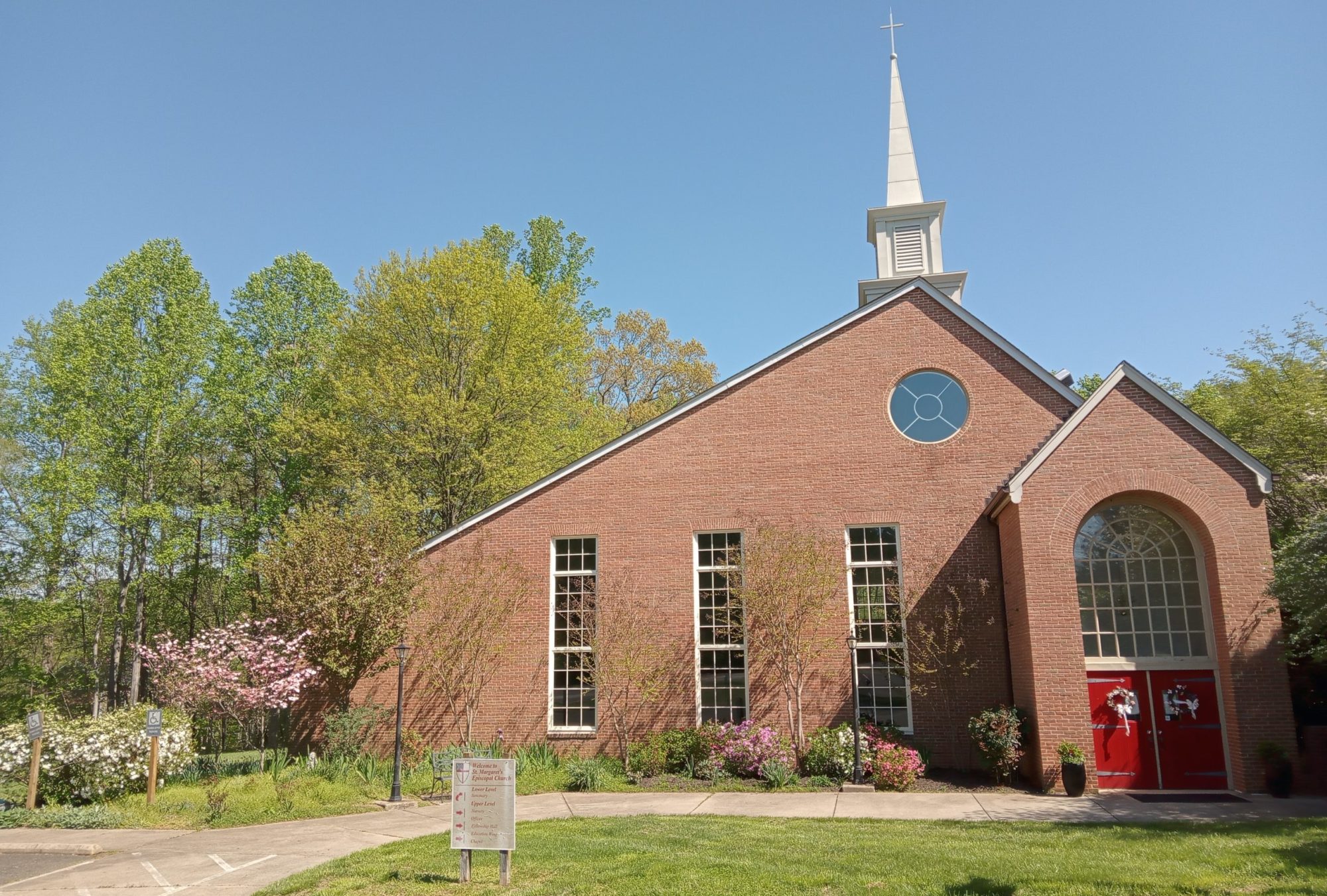
It surely made me smile when I realized I would begin my ministry at St Margaret’s on Good Shepherd’s Sunday…I hope it’s setting us up for a good start and I take this opportunity to tell you how excited I am to be here, with a special thanks for calling me to be your priest and pastor. You probably know that indeed, we call our priests “pastors” or we talk about “pastoral ministry” because of this image of Jesus as the good shepherd: We are invited to model our leadership and service based on his example.

Of course, John probably didn’t have that in mind when he wrote his Gospel. At the time, in Israel, and in the Bible, a “shepherd” was an image people would use to talk about kings. The kings were the “shepherds” of Israel, and it is an expectation in the Bible that the kings would do “what is right in the eyes of the LORD” when they lead the people. Unfortunately, as you probably know, it often just did not happen: the shepherds often turned out to be “not so good” or even “terrible” shepherds and it brought all sort of calamities on the people – You can read about that in the Books of Kings and in the Prophets. One good example of terrible shepherds would be the infamous King Ahab and Queen Jezebel.

But here is the question John asks for us today is: What kind of shepherd is Jesus? We know from many passages in the Gospel that it wasn’t Jesus’s ambition to become a king. When confronted to Pilate, and we read that during Holy week, not that long ago, Jesus insists that “[his] kingdom isn’t from this world”. So Jesus isn’t here to compete with the “shepherds of Israel”, proving himself a good leader as opposed to the bad leaders the people had before him. In John’s, Jesus proves himself to be a good shepherd as opposed to the hired hand. And I think this difference can help us a lot to understand what we talk about when we talk about Jesus as the good shepherd.

The good shepherd is not a hired hand. We know that the hired hand is not here to stay. But more than that, the way the hired hand is described in Jesus’s words, is that the hired hand does the job, yet he will run away when comes danger or adversity. And the hired hand runs away because he does not really care for his sheep. His life is more important to him than his flock. On the other way around, and Jesus repeats that five times, the shepherd is the one who “lays down his life”, the one who gives his life for the sheep.

And before we even enter more deeply in the meaning of this image, I would like to notice with you how beautiful it is that Jesus would say such a thing, that he is the one who does not run away. Think about it: The one who does not run away when there is danger or adversity. To me, when Jesus says that, it really connects to some deep longing we may have within our hearts. How many among us have ever been afraid of just that, that those we love would run away, let us down if something bad was to happen: Will my friends be there for me when I am sick? Will my spouse be there for me if I lose my job? Will my children be there for me when I am old? Or will they all abandon me?

Jesus promises his disciples – and he promises us – that he will always be there for them, and for us. And it is really something we can hear in this Easter season, and we will hear it again and again in the coming weeks: Jesus dies, leaves his disciples, only to be even more present than he used to be. Not just to be among them for a little while on earth, but ultimately to be with them spiritually and take them with him to the Father.

Sadly, often, it is something that may take a life time to realize – that Jesus is the faithful companion always present, because we don’t really understand what the shepherding is about. We think that if God does not answer our prayers the way we want to, God has forgotten about us, and we are so focused on our frustrated desires or even our very legitimate suffering, that we fail to see the companionship and the many ways Jesus makes himself present to us, to comfort us and support us, but also to lead us into spiritual maturity and into a bigger life. I have a friend who said she realized that when she lost her job. She said at the beginning all she could see and think about was that God needed to provide her a new job. But little by little, she opened her eyes on the love and care she was surrounded with by her friends and neighbors and how it made all the difference in this difficult time that turned out to be much longer than what they had all expected. Her prayer was answered in a very different way than what she had expected, but she said that it was much more precious to have received so much love along the way.

Jesus talks to us the language of the heart when he says he would never leave us, and he invites us to have a conversation, a real companionship, he invites us to experience his presence day by day. And so, back to our first question, Jesus does not describe himself as the “good shepherd” versus the “bad shepherds”, Jesus is not just “not an unfair ruler”. Jesus describes himself as the “good shepherd” versus the “hired hand”: Jesus is the one who cares, as opposed to all those who do not care.

Jesus cares. He says he cares about his sheep right there and about all the other sheep, and he cares so much that their lives are more important to him than his own. Do we really believe this? That Jesus does not have “more important things to do” (as I hear so often) than caring for us, that Jesus cares for every one of us, and he cares for those we care for, and he also cares for those we don’t care about?

And so maybe that’s what we need to hear today. If Jesus is the shepherd in the sense that Jesus cares, what does it mean for us? According to the passage of the first Letter of John we have just heard, if we’d really believed that, first it would change the way we pray (and we have just talked about that) we would pray with boldness and truth, knowing that in our relationship with him we would receive what we ask for, and it would also change the way we behave: We would love in truth and action, says John in his Letter, which means: we would care.

There is a quotation by Mandy Hale I really love. She says: “To make a difference in someone’s life you don’t have to be brilliant, rich, beautiful or perfect. You just have to care.” And it’s so true, isn’t it? So much of our time is spent trying to be brilliant, rich, beautiful or perfect hoping to “make a difference” when the only difference we can make is by caring, wherever we are and whatever we do. Students want to have a teacher who cares. Patients want to have a doctor who care. Citizens want to have a President who care. We don’t necessarily expect them to have a Nobel or a Phd. We just want them to care! Even when we call the help desk, we hope that the technician will care! It’s the same with parenting. Parents who make a difference for their children aren’t the parents who are perfect. Parents who make a difference are the ones who care. There are so many people in the world who don’t care, what if we were the ones who make a difference, not necessarily by doing something extraordinary, or even by being extraordinarily “good people” as opposed to those who are “bad people”, but what if we’d make a difference by being those who care in the name of the Good Shepherd?

Maybe you have read Bishop Curry’s last book “Love is the way”. One of the things he says which I think is very important is that in the end, in his ministry of shepherding, as a priest, bishop and now Presiding Bishop, he understood that all he had to do what to do his job! And he says it is true for all of us. He says: “None of us can know where our witness to love might lead – what light we might bring to the world. Our job is to do our job, and to let God do God’s job.” Do your job – not as the hired hand, who sees only his own profit. Do your job as the shepherd who cares deeply. Amen.